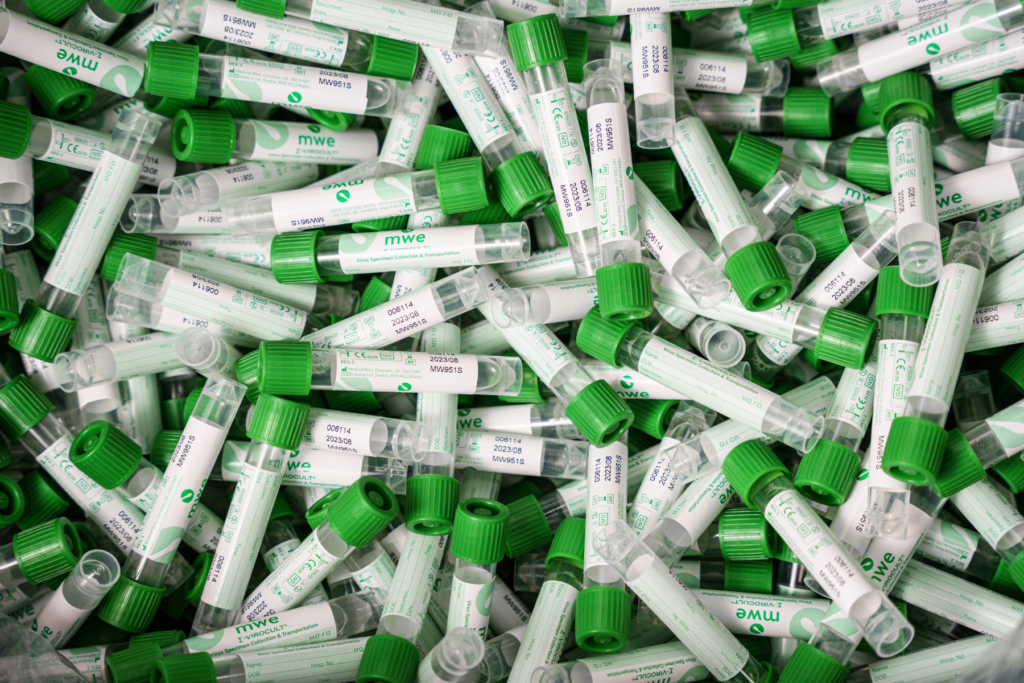
Across clinical microbiology, more laboratories are reviewing their specimen collection pathways and making the transition from traditional gel transport systems to liquid collection and transport devices. The reason is simple: laboratories want to get more from every sample they collect.
Every specimen represents a patient, and in many cases there is only one opportunity to collect it. As diagnostic testing continues to evolve, the same specimen is increasingly expected to support multiple testing methods, from traditional culture through to molecular assays. Liquid transport systems provide greater flexibility by allowing a single specimen to be used across different diagnostic workflows, helping laboratories maximise the value of each collection.
The move is also being driven by increasing laboratory automation and changing testing demands. Liquid specimens are well suited to automated processing and can be easily aliquoted for additional investigations without requiring repeat sampling. This can improve laboratory efficiency while reducing the inconvenience and potential delays associated with recalling patients for further specimen collection.
For healthcare providers, this means fewer repeat collections, streamlined workflows and the confidence that specimens can support both current and future diagnostic requirements. As healthcare systems continue to focus on efficiency, preparedness and improved patient pathways, many organisations are recognising that the specimen collection device is no longer just a transport medium – it is the first step in the entire diagnostic process.
Transitioning to a liquid collection and transport system does not need to be complicated. While any change in established laboratory practice requires careful planning, the process can be straightforward with the right support and guidance.
At Medical Wire & Equipment, we work closely with laboratories throughout their transition, providing practical training and implementation support tailored to individual requirements. This includes on-site training, virtual education sessions, instructional videos, step-by-step guidance documents and technical resources designed to help laboratory teams adopt new workflows with confidence.
Our experienced team can also provide advice on validation studies, workflow considerations and best practice to ensure a smooth implementation while minimising disruption to routine laboratory operations.
As diagnostic technologies continue to advance, specimen collection devices need to evolve alongside them. Choosing a liquid collection and transport system enables laboratories to make the most of every sample, supporting multiple testing pathways from a single collection and helping to future-proof diagnostic services for whatever comes next.
If your laboratory is considering the move from gel to liquid transport systems, our team is available to discuss your current workflow and provide the resources and support needed to make the transition as seamless as possible.